LESSONS LEARNED · ZEWA × DESPRECOPII.MEDIA
Seven things we learned building the ZEWA campaign — and would take into any brief

After “From potty to independence in two steps”, the Desprecopii.MEDIA team wrote down what truly stayed with us: why life stage beats demographic segment, how Gen Z and millennial parents consume the same answer differently, what it means to design for “after the click”, and why creative freedom needs a partner who knows what is non-negotiable.
A three-minute case-study film shows what a campaign did. What it does not show is where we hesitated, what we changed along the way, and what we only understood at the end. For people working in marketing, that part is usually more useful than a list of executions.
So, rather than describe the project's formats again, we chose seven lessons. None is a theory; each came at the cost of a real-time decision made together with the Essity team.
Watch the campaign film
ZEWA × Desprecopii.MEDIA case study · English version. Watch on Vimeo
1. Life stage beats demographic segment
Briefs usually start with “mothers aged 25–40, urban, middle-to-upper income”. Accurate, and almost useless: it tells you whom you are addressing, but not why that person would listen to you right now.
Moving on from nappies gave us that “why”. It is a stage lasting a few weeks when parents actively seek guidance, children are trying, and moist toilet tissue has, for the first time, a role that needs no explanation. When you choose the right moment, the product no longer needs arguments — it needs a place in the routine.
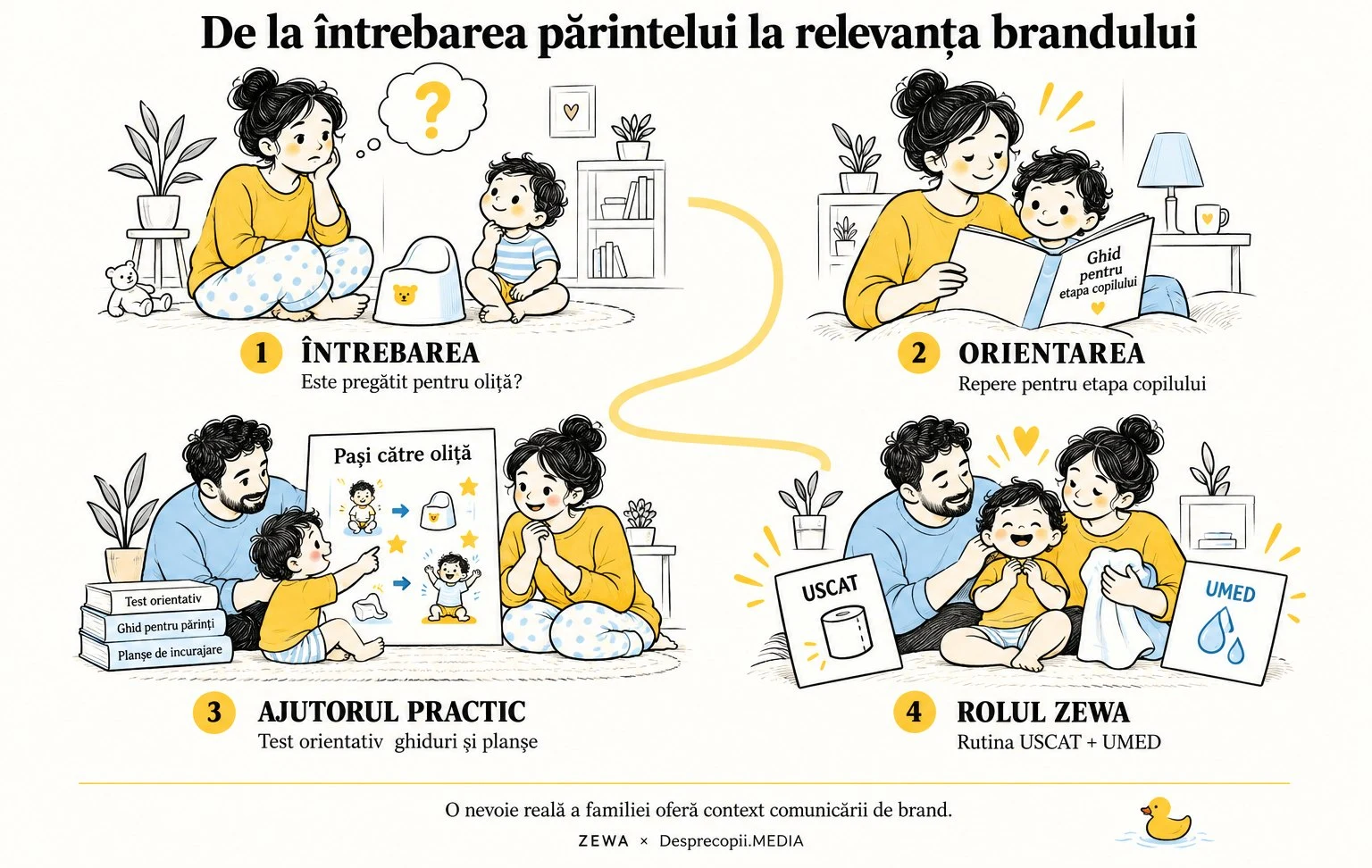
The segment tells you whom you are speaking to. The life stage tells you why they listen. The latter changes both the editorial brief and the touchpoints.
2. The real question is the brief
“Is my child ready for the potty?” is not an insight found in a research deck. It is a question the Desprecopii community has been asking in different forms for twenty-six years. We took it literally and built everything around it: the seven-question guidance quiz, the guides, and the videos featuring Dr. Iulia Balint-Boia and Dr. Roxana Hristianovici.
The lesson for marketers: before writing a message, find the exact sentence your audience uses when it needs you. Find that, and you have your headline, your structure and your first format.
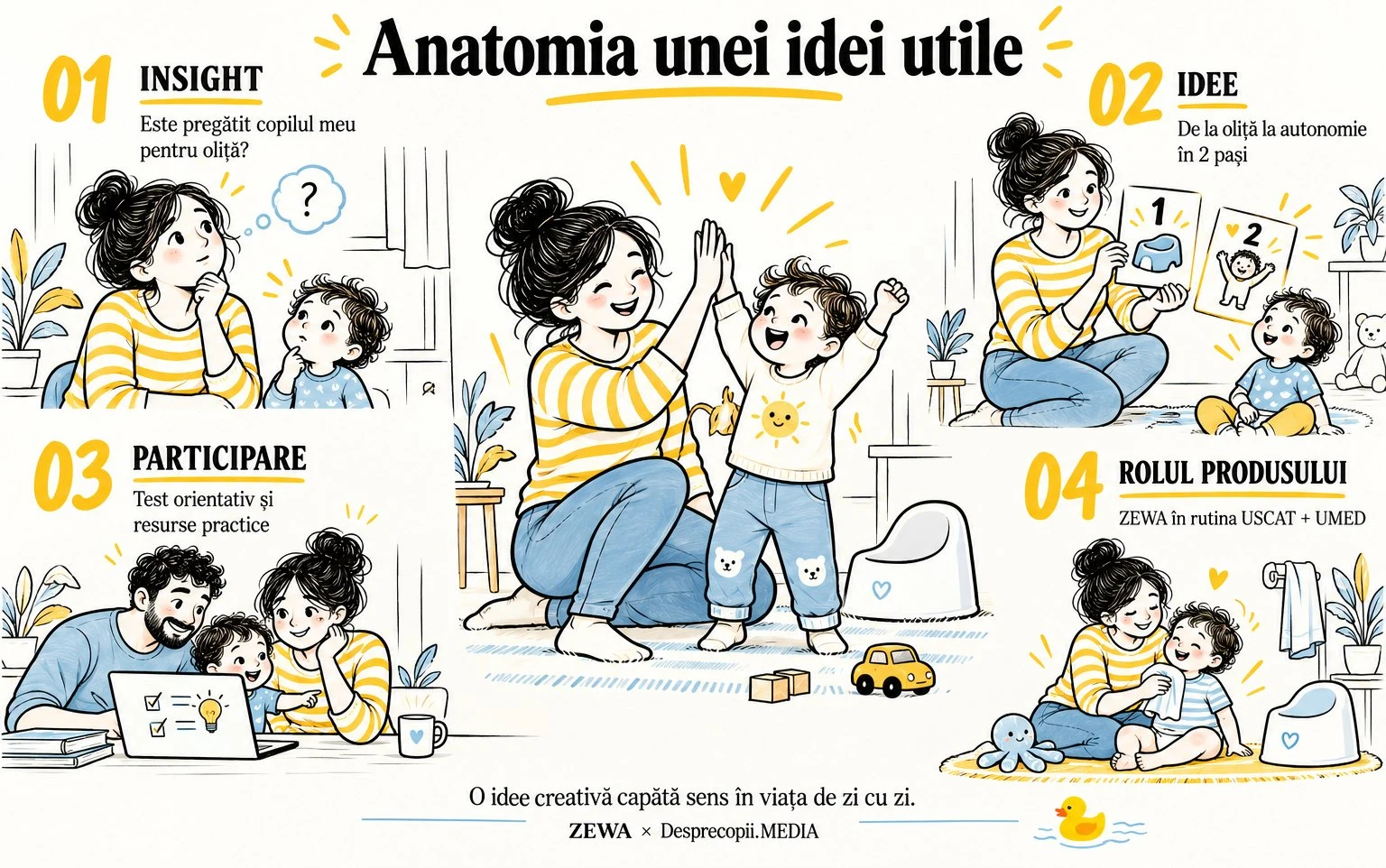
3. Gen Z and millennials do not want different answers. They want the same answer at different speeds
Our community is dominated by millennial parents aged 30–40, but a different segment is growing: Gen Z parents aged 22–28, raising their first child with a phone in hand and little patience for “read the full article”.
The difference is not content, but pace and tone. Millennials want the full explanation and expert validation; they ask “why?” before “how?” and save the guide for later. Gen Z parents want quick reassurance — “is this normal for us?” — in a vertical format, from a voice that does not preach. The first group is irritated by oversimplification and promises such as “in three days”; the second closes the content at the first sentence that sounds like a lecture.
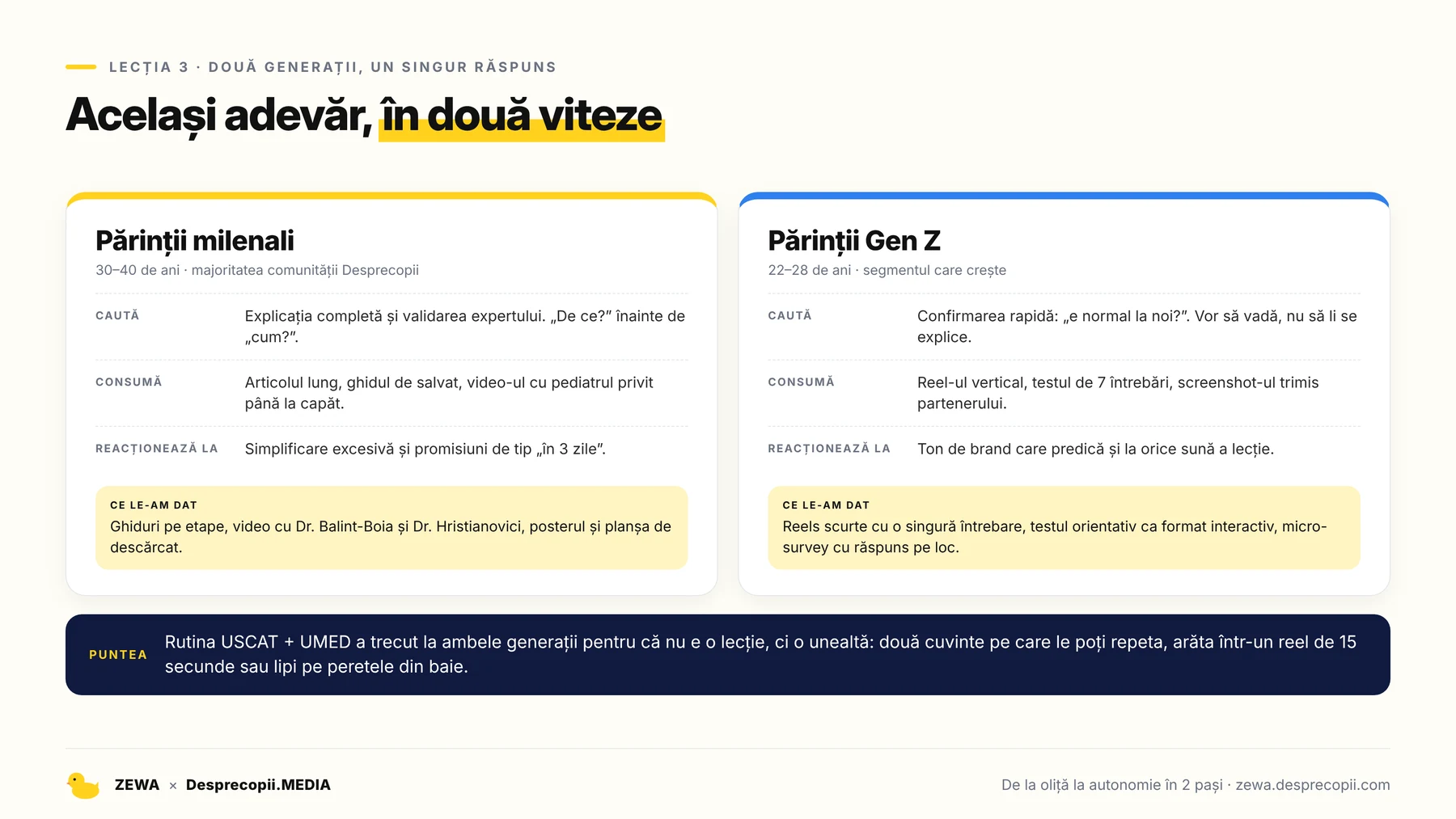
What we actually did: not two campaigns, but one idea at two speeds. Reels featuring the paediatricians opened a single question in fifteen seconds; articles and guides explored it fully. The guidance quiz was the bridge format — quick enough for Gen Z, serious enough for millennials, and the only one both generations sent to their partners as a screenshot. And the DRY + WET routine worked across the audience because it is not a lesson, but a tool: two words you can repeat, demonstrate or put on the wall.
The lesson: if you feel the need to “translate” a campaign for a generation, the central idea is probably too complicated. A good idea changes in pace, not in substance.
4. The product needs a verb, not an adjective
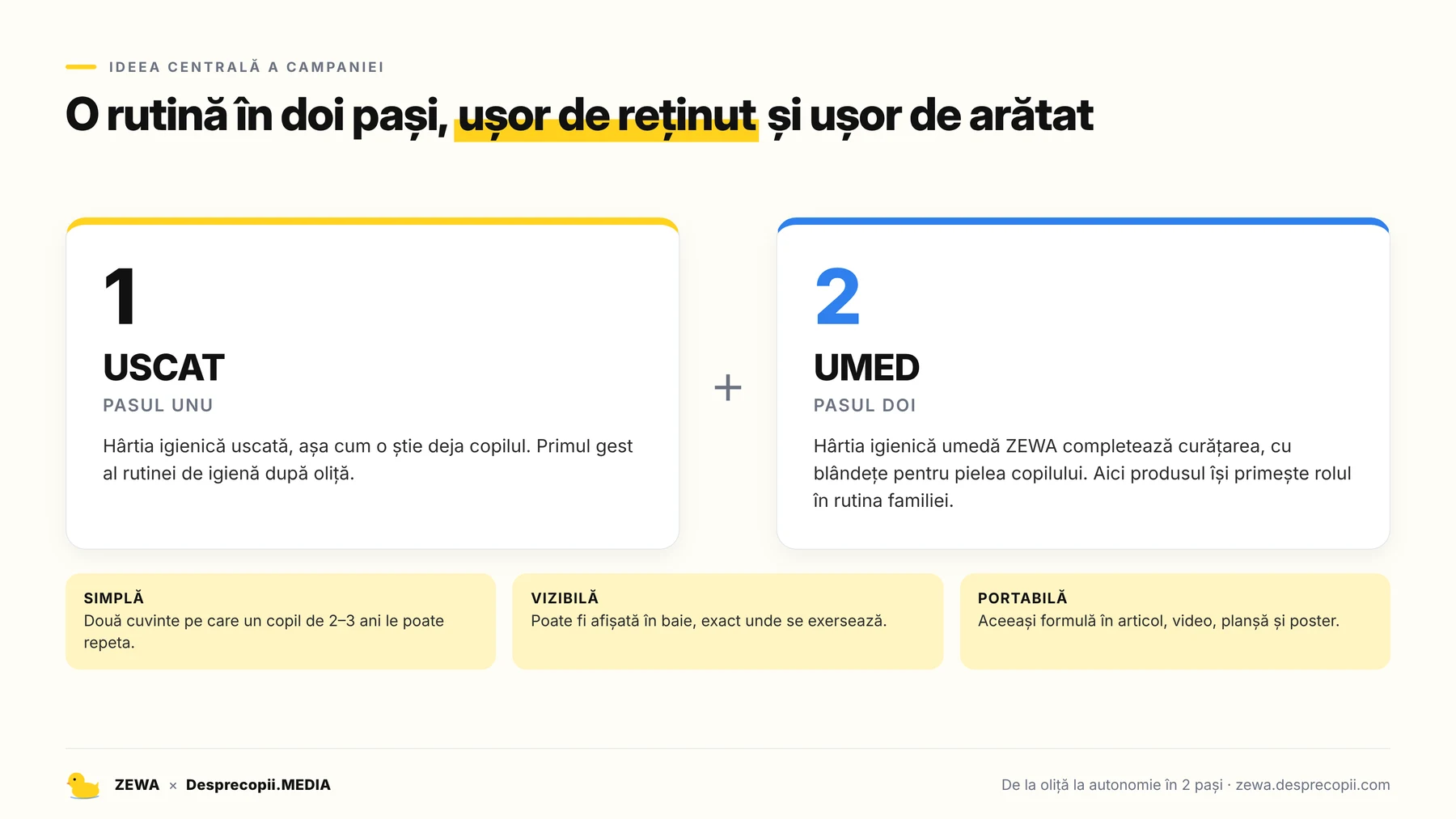
The easiest mistake in a content campaign is to leave the product in the footer as a polite sponsor. The second easiest is to put it in every sentence. Between them lies a simple solution: give the product an action.
In the DRY + WET routine, ZEWA moist toilet tissue is not “gentle” or “trustworthy” — it is step two. The child asks for it, the parent hands it over, and the action repeats ten times a day. A product with a clear verb no longer needs frequent mentions; it simply needs to be present when the action happens.
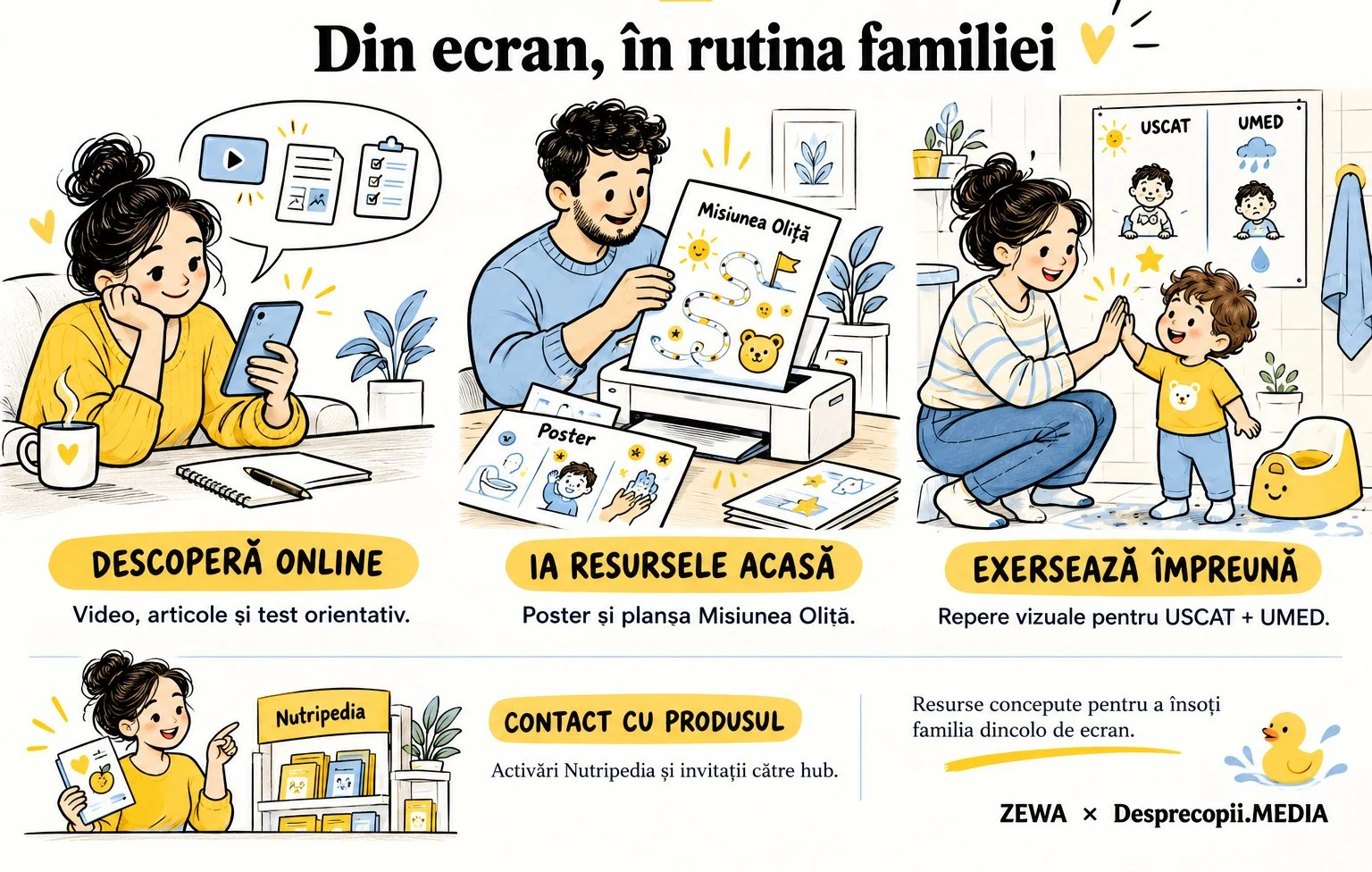
5. Design what happens after the click
A campaign's standard question is “how do we attract attention?”. The question that changed this project most was “what useful thing do we leave behind?”.
The bathroom poster and “Potty Mission” activity sheet were not supporting materials; they were the destination. Parents could close the article and keep something for practice time — on the wall, next to the potty, without a phone. A visual explanation available in the bathroom has a different function and lifespan from a feed message. Sampling at Nutripedia activations then closed the loop: physical contact with the product and an invitation back to the hub.
The lesson is almost obvious and rarely applied: before approving a format, ask what a person can do with it the next day.
6. Community is a research department, not just an audience
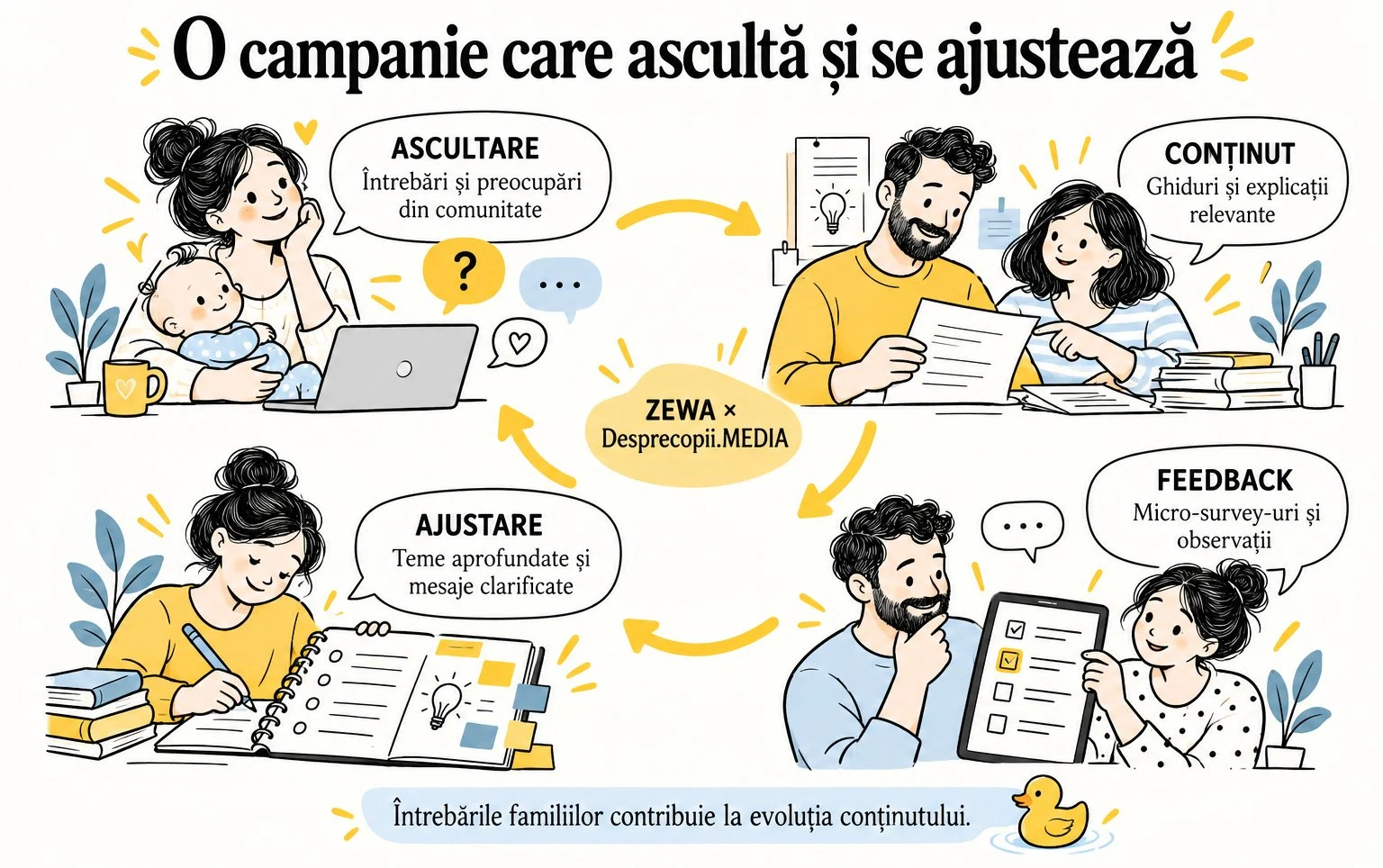
A parenting publisher has access to its audience's questions in real time. The value of that access depends on how quickly it becomes decisions.
Micro-surveys and observations from community conversations informed adjustments along the way: subjects to explore, explanations to clarify and wording to simplify. The central routine did not change; the resources around it grew in response to parents' questions. For any team collecting feedback, there is just one test: which editorial decision could change because of this week's answers?
7. Creative freedom needs a partner who knows what is non-negotiable
The project was built with Essity's marketing team, who gave us considerable freedom and had the courage to support an editorial rather than a strictly promotional approach. But the lesson is not about freedom; it is about how it was supported. Our Essity colleagues knew exactly when to step in to keep the ideas close to ZEWA's mission without dampening the team's enthusiasm.
Freedom becomes productive when both teams understand what must remain constant and where experimentation is worthwhile.
For a brand, that means entering the project with two clear lists: what cannot change and where it wants to be surprised. For an agency, it means asking those questions at the first meeting, not the first feedback round.
What we take into the next brief
If we had to summarise the seven lessons in three questions to ask at the start of any content project, they would be:
- At what moment in the audience's life do we become useful — and how does each generation in that audience consume the answer?
- What verb does the product have at that moment?
- What can a person do with the information after seeing it?
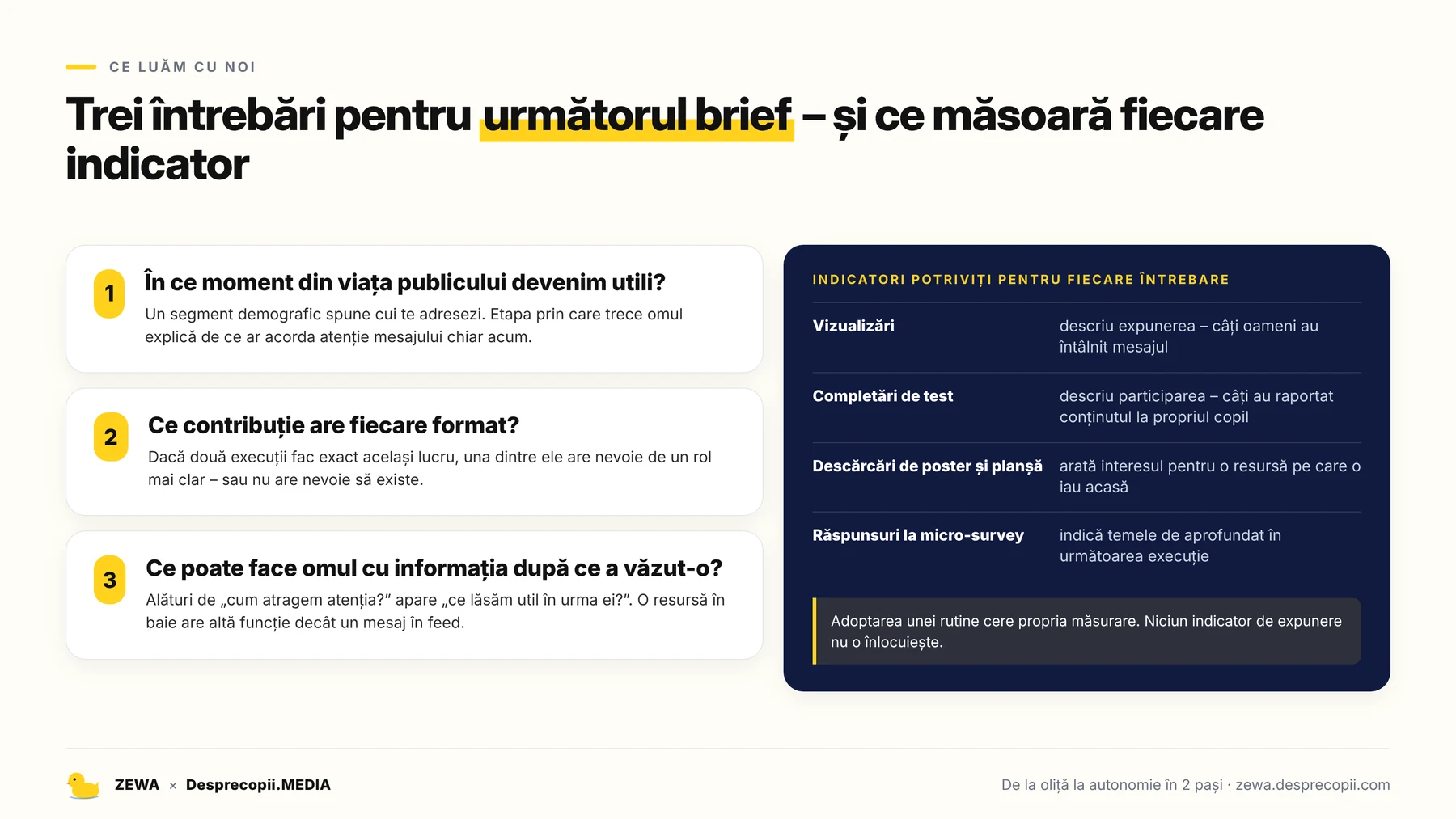
The answers must be tracked through appropriate indicators: views describe exposure, quiz completions describe participation, and downloads show interest in a resource. Adoption of a routine requires its own measurement — and, at the end of the year, that is the only one that matters to the brand.
Our experience with ZEWA and Essity leaves us with a simple criterion for the next idea: we must be able to show where, when and how it is useful to a family. If we cannot answer that in one sentence, we do not yet have an idea. We only have a media plan.